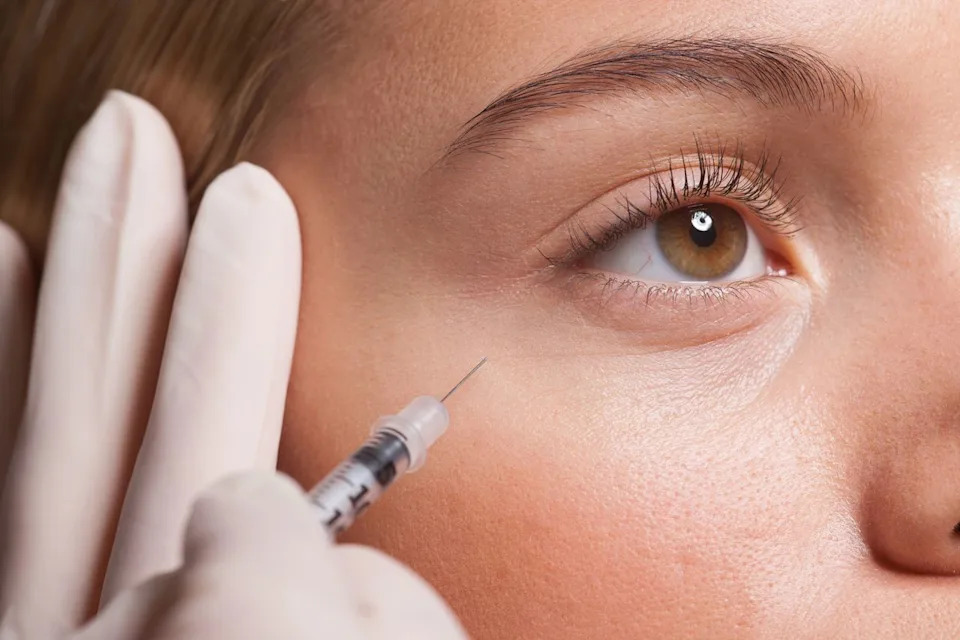
Also known as tear trough filler, this treatment aims to improve the transition between the lower eyelid and the upper cheek. When performed with careful patient selection and precise technique, it can support a fresher, more rested and more balanced facial appearance without changing the natural expression of the eyes.
Because the under-eye region is anatomically complex, treatment should not be approached as a simple volume-filling procedure. Skin thickness, fat pad position, pigmentation, vascular shadowing, facial structure and previous filler history should all be evaluated before deciding whether under-eye filler is the right option.
[IMAGE: Close-up premium clinical image showing natural under-eye assessment | Alt text: under eye filler consultation for tear trough hollow correction]
What Is Under-Eye Filler?
Under-eye filler is an injectable treatment used to improve hollowness or volume loss in the tear trough area. The tear trough is the groove that may appear between the lower eyelid and the upper cheek. In some people, this groove creates a shadow that makes the eyes look tired, even when they sleep well.
The treatment usually involves the use of a soft hyaluronic acid-based filler selected specifically for delicate areas. Hyaluronic acid is a naturally occurring substance in the skin that helps retain moisture and support tissue structure. In aesthetic medicine, carefully selected fillers can be used to create subtle contour improvement and smoother light reflection.
Under-eye filler is not suitable for every type of dark circle. If darkness is mainly caused by pigmentation, visible blood vessels, thin skin or puffiness, other treatments may be more appropriate. For this reason, under-eye evaluation is essential before treatment planning.
How Does Tear Trough Filler Work?
Tear trough filler works by softening the hollow transition between the lower eyelid and cheek. When this groove is reduced, the shadow effect may decrease, and the under-eye area may appear smoother and less tired.
The goal is not to overfill the area. A natural result depends on using the correct product, placing it at the correct depth and respecting the anatomy of the lower eyelid. Overcorrection in this region can create puffiness, swelling or an unnatural appearance.
In many cases, under-eye filler is part of a broader dermal fillers treatment plan. Sometimes cheek support is needed before or instead of direct tear trough correction, because midface volume loss can make the under-eye hollow look deeper.
Who Is a Good Candidate for Under-Eye Filler?
A good candidate for under-eye filler is usually someone with visible hollowing beneath the eyes, mild to moderate tear trough depression and good skin quality in the lower eyelid area. The best results are often seen when the main problem is structural shadowing rather than pigmentation or severe skin laxity.
Under-eye filler may be suitable for people who have:
- A tired appearance caused by under-eye hollowness
- A visible tear trough groove
- Shadowing between the lower eyelid and cheek
- Mild volume loss around the upper cheek
- Good skin elasticity in the lower eyelid region
- Realistic expectations about subtle improvement
It may not be suitable if there is:
- Significant under-eye puffiness or eye bags
- Severe skin laxity
- Dark circles mainly caused by pigmentation
- Very thin or loose lower eyelid skin
- Uncontrolled swelling tendency
- Previous filler complications in the area
In some patients, alternative or supportive treatments such as skin boosters, PRP treatment, laser skin rejuvenation or aesthetic dermatology treatments may be recommended instead of filler.
[IMAGE: Dermatologist examining lower eyelid and cheek transition | Alt text: tear trough filler assessment for dark circles treatment]
Benefits of Under-Eye Filler
The main benefit of under-eye filler is a more rested and refreshed appearance. When the right patient is selected, the treatment can improve the shadow caused by hollowness and create a smoother transition between the eyelid and cheek.
Potential benefits include:
- Reduction in tear trough hollowness
- Improvement in tired-looking eyes
- Softer under-eye shadows
- More balanced eye-cheek transition
- Subtle facial rejuvenation without surgery
- Natural-looking improvement when performed conservatively
Under-eye filler is often preferred by people who do not want a dramatic change. The purpose is not to make the face look different, but to reduce the tired expression caused by volume deficiency or shadowing.
Under-Eye Filler and Dark Circles Treatment
Dark circles treatment depends on the underlying cause. Not every dark circle can be corrected with filler. Some dark circles are caused by genetics, pigmentation, vascular visibility, allergies, skin thinning or lifestyle factors. Others are mainly caused by a hollow tear trough that creates a shadow.
If dark circles are caused by hollowing, under-eye filler may help by reducing the shadow effect. If pigmentation is the main issue, filler alone may not provide enough improvement. In these cases, a combination plan may be more appropriate.
A dermatological evaluation helps determine whether the concern is caused by volume loss, pigmentation, skin quality or a combination of factors. This distinction is important for realistic treatment planning.
Treatment Process
The under-eye filler process begins with a detailed consultation. The lower eyelid, tear trough, cheek support, skin quality and facial proportions are assessed. The aim is to decide whether direct tear trough filler, cheek support or another treatment pathway would be safer and more effective.
1. Consultation and Facial Assessment
The under-eye area is examined from different angles. Puffiness, hollowness, skin thickness, asymmetry and previous filler history are evaluated. If the patient is not a good candidate, alternative options may be discussed.
2. Treatment Planning
The amount and placement of filler are planned conservatively. Under-eye treatment usually requires small quantities. Overfilling can create swelling or an unnatural result, so precision is more important than volume.
3. Application
The filler is placed carefully into the planned area using an appropriate technique. Depending on the case, a cannula or needle technique may be preferred. The goal is controlled correction with minimal trauma to the delicate under-eye tissues.
4. Final Check
After the application, the area is assessed for symmetry, contour and early swelling. The result may look improved immediately, but the final appearance should be evaluated after the initial settling period.
[IMAGE: Minimal aesthetic treatment room with under-eye filler preparation | Alt text: under eye filler treatment process in dermatology clinic]
Recovery After Under-Eye Filler
Recovery after under-eye filler is usually mild, but the lower eyelid area can be more sensitive than other facial regions. Temporary swelling, tenderness, minor bruising or small irregularities may occur during the first days.
Patients are generally advised to avoid pressure on the area, intense exercise, alcohol and excessive heat exposure for a short period after treatment. Makeup may need to be avoided for the first day depending on the physician’s instructions.
Because the under-eye area can retain fluid, swelling may be more noticeable in some patients, especially in the morning. This is one reason why conservative treatment planning is very important.
When Are Results Seen?
Some improvement may be visible immediately after the procedure, especially if the main problem is hollowness. However, mild swelling can temporarily affect the appearance. The final result is usually assessed after the filler has settled and the tissues have adapted.
The duration of results varies depending on the filler type, patient anatomy, metabolism, lifestyle and the amount used. Under-eye fillers may last longer than fillers in more mobile areas, but maintenance timing should be individualized.
Can Under-Eye Filler Be Combined With Other Treatments?
Yes. Under-eye rejuvenation may involve more than one treatment, especially when the concern is not only hollowness. For example, skin quality may be supported with skin boosters or mesotherapy. If there is midface volume loss, cheek filler may be considered before direct under-eye correction.
For patients interested in broader facial rejuvenation, related treatments such as Botox, dermal fillers and aesthetic dermatology procedures may be evaluated together.
Under-Eye Filler Safety
The under-eye area requires medical expertise because it contains delicate vessels, thin skin and complex anatomical structures. Safe treatment depends on proper patient selection, product choice, injection depth and conservative planning.
Possible side effects include swelling, bruising, tenderness, unevenness, prolonged puffiness, bluish discoloration or dissatisfaction with the result. Rare but serious vascular complications are possible with injectable treatments, which is why the procedure should be performed by trained medical professionals.
Patients with previous filler in the under-eye area should inform their physician, even if the treatment was performed years earlier. In some cases, old filler may need to be evaluated or dissolved before a new treatment plan is made.
Under-Eye Filler in Izmir
People researching under eye filler Izmir often look for a treatment that improves tired-looking eyes while preserving a natural facial expression. The key point is not only choosing a filler, but creating a personalized plan based on anatomy, skin quality and the real cause of the under-eye concern.
In a dermatology-based approach, the treatment is planned after assessing whether the patient needs filler, skin quality improvement, pigmentation management or a combination of procedures.
Frequently Asked Questions
Is under-eye filler painful?
Most patients tolerate the treatment well. The under-eye region is delicate, but the procedure is usually performed with techniques designed to minimize discomfort.
Does under-eye filler remove dark circles completely?
Not always. If dark circles are caused by hollowness and shadowing, filler may help. If the darkness is caused by pigmentation, thin skin or vascular visibility, other treatments may be needed.
What is the difference between under-eye filler and tear trough filler?
They usually refer to the same treatment area. Tear trough filler specifically targets the groove between the lower eyelid and cheek, while under-eye filler is a broader term used for rejuvenation of the lower eyelid area.
Can under-eye filler look natural?
Yes, when the patient is suitable and the treatment is performed conservatively. Natural-looking results depend on precise placement and avoiding overcorrection.
Can under-eye filler cause puffiness?
Yes, puffiness can occur, especially if too much filler is used or if the patient has a tendency for fluid retention. Proper assessment before treatment helps reduce this risk.
How long does under-eye filler last?
The duration varies from person to person. It depends on the filler type, anatomy, metabolism and lifestyle. Maintenance should be planned individually.
Can under-eye filler be dissolved?
Hyaluronic acid fillers can usually be dissolved with a specific enzyme when medically appropriate. This should be performed by an experienced physician after evaluation.
Is cheek filler sometimes needed before under-eye filler?
Yes. In some patients, the under-eye hollow appears deeper because of volume loss in the upper cheek. Supporting the cheek area may improve the eye-cheek transition and reduce the need for direct under-eye filler.
Is under-eye filler suitable for eye bags?
Not always. If there is significant puffiness or fat prolapse, filler may worsen the appearance. A detailed assessment is necessary before treatment.
When can I return to daily life?
Many patients return to daily activities shortly after treatment, but mild swelling or bruising may occur. Social downtime varies depending on individual sensitivity.
Personalized Under-Eye Rejuvenation
Under-eye rejuvenation should be subtle, balanced and medically planned. The aim is not to erase every line or create an artificial look, but to improve tiredness caused by hollowness, shadowing or volume imbalance.
For best results, the treatment plan should consider the entire eye-cheek area, not only the hollow beneath the eye. In some cases, under-eye filler is the right option; in others, skin quality treatments, cheek support or different dermatological procedures may be more suitable.
Treatment planning should be performed individually. In our clinic, procedures are carried out by Dr. Orhan Demirer in Izmir.